
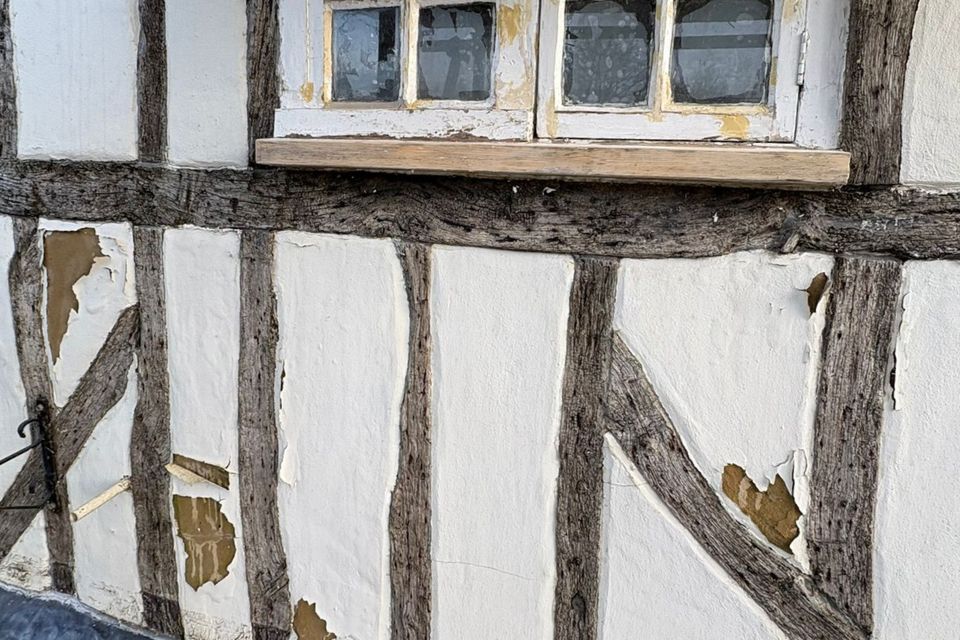
The discovery of damp in a listed building often causes panic for owners of these unique period properties. These buildings, protected for their significant architectural and historical interest, cannot be treated like modern homes when it comes to damp proofing. While standard damp proofing techniques might offer a fast fix for a newer home, they pose a significant threat to a heritage property.
The core difference lies in how listed buildings are constructed. They come in all shapes and sizes and are mainly built with solid, porous walls designed to manage moisture by allowing it to pass through and evaporate, and with timber frames and suspended wooden floors. In short listed buildings are meant to breathe. When this evaporation process is disrupted by modern, impermeable materials, the wall’s internal moisture levels can soar, accelerating decay, timber rot, and structural damage.
The question is not simply if you can damp proof a listed building, but how you can do it without causing irreversible harm. The answer lies in conservation-led methods, starting with a respect for the existing structure and, more often than not, embracing the natural material that is traditional lime plaster.
Respecting the listed building’s fabric and historical importance
The most crucial step in any work on a listed building is adhering to the principle of conservation. You are the custodian of a piece of history, and any intervention must be respectful of the building’s fabric and its historical importance.
This principle forms part of the Listed Building Consent (LBC) process, a legal requirement for any alteration that might affect the character of the building. Before touching a single wall or floor, a thorough structural waterproofing survey must be carried out to correctly diagnose the cause of the damp problem. Damp in heritage buildings is rarely simple rising damp; it’s usually caused by defects like high ground levels, defective rainwater goods or, most commonly, the use of inappropriate modern materials like sharp sand and cement renders.
Any proposed repair must prioritise the retention of original materials and construction techniques. Using materials that are incompatible with the historic structure can, over time, destroy the masonry, trap moisture, and lead to hygroscopic salt contamination. Therefore, the approach must always be sensitive, reversible where possible, and complementary to the building’s original DNA.
What modern damp proofing methods are prohibited or listed buildings?
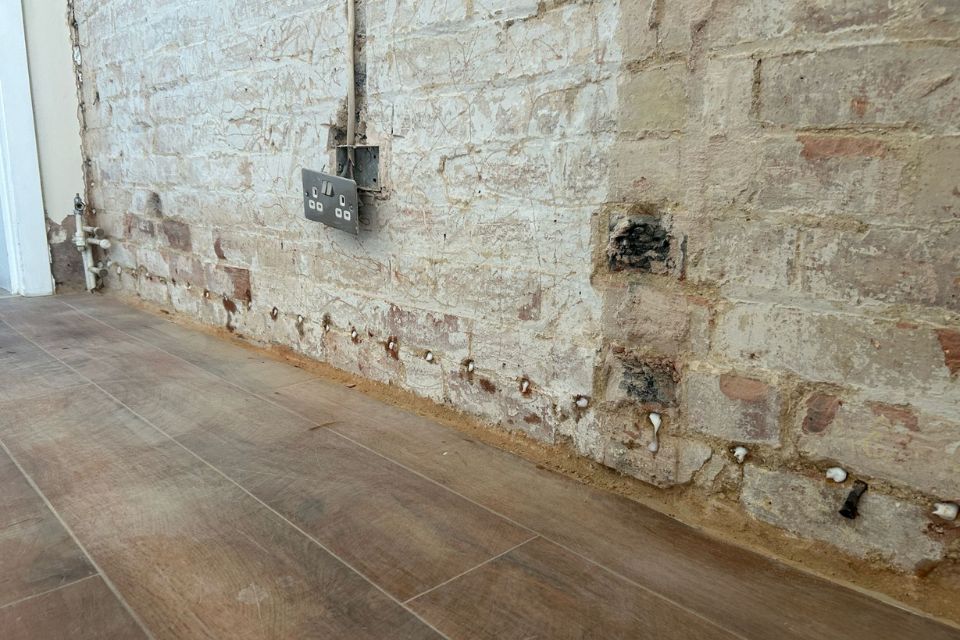
The single biggest mistake made when dealing with damp in historic structures is applying modern solutions. Conservation bodies are clear on the unsuitability of two major techniques:
Chemical damp proof courses (DPCs)
In a modern cavity wall, an injected DPC creates a neat, artificial barrier. However, in a solid, historic wall, the drilling of holes into which silicone-based chemicals are injected is highly invasive and damaging to the original, protected structure. Furthermore, it treats the symptom (moisture at the base of the wall) and ignores the reality that listed building walls manage moisture differently.
For a listed building, you cannot inject chemical damp proof courses without explicit Listed Building Consent, and consent is often refused. Injecting chemicals into historic masonry can damage the bricks or stone, and the resulting non-porous band may simply force moisture to evaporate higher up the wall or into adjacent floors, causing new problems. The best course of action for mitigation against damp in an old building is often proper drainage and the removal of external obstructions.
Cement-based plasters and renders
The use of modern Portland cement is the antithesis of conservation. Traditional walls rely on being able to breathe. Cement, especially when mixed with sharp sand, creates a hard, brittle, and impermeable barrier.
You cannot use sharp sand and cement as renders or plasters on a listed building’s internal or external walls. When cement is applied externally, it traps rainwater within the wall structure. When it is applied internally, it prevents internal moisture from evaporating, causing the damp to manifest elsewhere, often damaging internal timbers (leading to wet or dry rot) and accelerating the deterioration of the masonry behind the cement. The wall is essentially choked, forcing it to hold the water it was designed to release.
Interestingly, it is often the crumbling of old sand and cement renders that Property Conservation Services is called out to rectify. In this instance, we would not replace the plaster, like-for-like, but would recommend using traditional lime plaster instead.
The use of traditional lime plaster
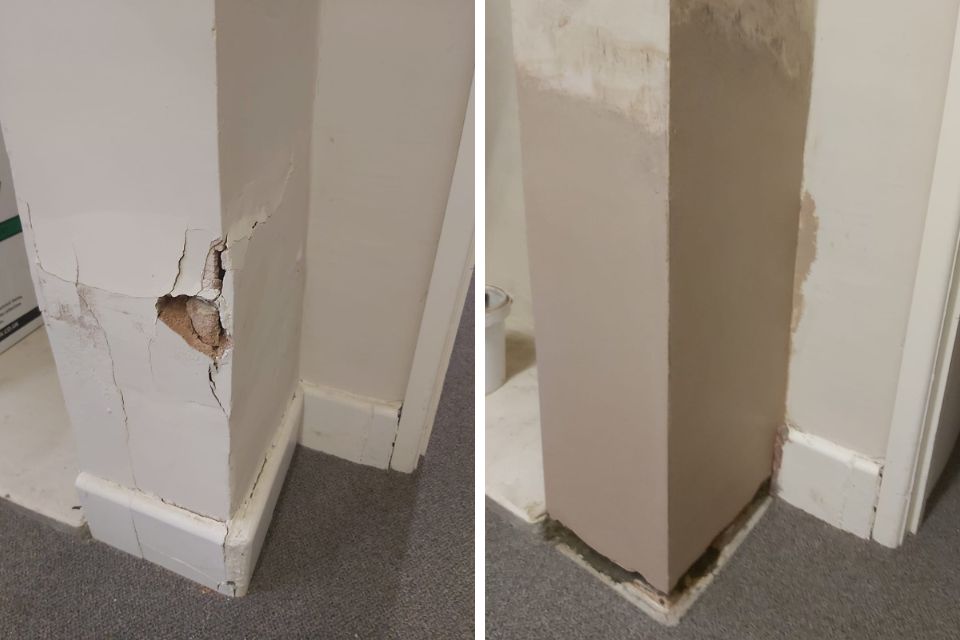
If chemical DPCs and sand-cement are off-limits, what is the approved solution? The definitive answer is the revival of traditional lime plaster.
Lime plaster is the historical material used in virtually every building constructed before the 1930s, and its benefits for damp remediation are numerous:
Breathability (vapour permeability): This is lime’s most vital attribute for listed buildings. Unlike modern gypsum or cement plasters, lime is porous. This porosity allows water vapour within the wall (either from rising damp or condensation) to evaporate slowly and safely to the surface. It allows the wall to dry out naturally, eliminating the trapped moisture that causes rot and decay.
Flexibility: Historic buildings inevitably move and shift with temperature changes and ground settlement. Lime plaster is inherently softer and more flexible than cement, accommodating this movement without cracking. This longevity means fewer repairs over time.
Salt resistance: As moisture rises from the ground, it brings soluble salts (nitrates and chlorides) with it. When modern plasters are used, these salts crystallise behind the plaster, causing it to blister and fail. Lime is more resilient, allowing salts to migrate to the surface where they can be brushed away, keeping the main wall fabric healthy.
As conservation professionals, we strongly advise that you should use traditional lime plaster where possible for all internal wall finishes to manage moisture and maintain the integrity of the wall.
Can traditional lime plaster cope with severe damp?
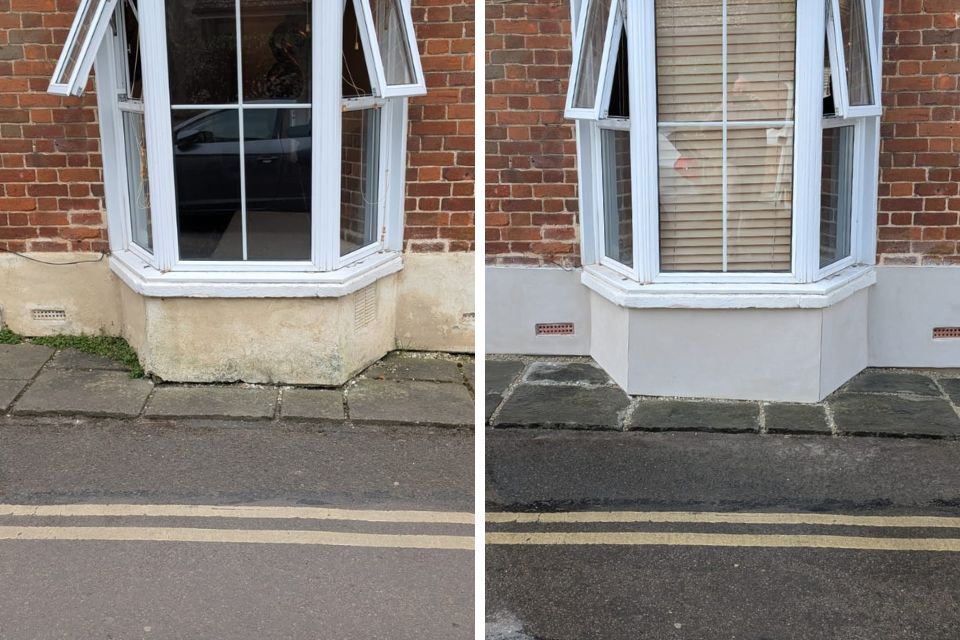
In areas of severe and persistent moisture exposure, like around ground level, chimney stacks, or internal walls of basements, a regular lime plaster might be overwhelmed by the sheer volume of water and ground salts.
Fortunately, tradition provides an answer that is compatible with conservation principles: a breathable, water-resistant lime plaster. Through the addition of natural pozzolans (for example, certain volcanic materials), the structure of the lime is modified. This results in a material that is:
Waterproof, but still breathable: The pozzolans reduce the pore size of the plaster below the threshold where liquid water can pass through, making it highly water-repellent (or ‘salt-resistant’). Crucially, however, the pores remain large enough for water vapour to escape.
Salt-resistant: These specific formulations are designed to handle high concentrations of salts without breaking down, protecting the finished surface while allowing the wall behind to manage its moisture.
This is an acceptable alternative that allows owners of listed buildings to achieve a functional damp barrier while fully respecting the historic construction.
The role of Historic England in damp proofing listed buildings
Historic England is the regulatory body that both protects England’s historic environment, including listed buildings and acts as the expert advisor to the government and local authorities. They also manage the National Heritage List for England, which is a database of all listed buildings.
When a property owner applies for Listed Building Consent, the local planning authority will consult with Historic England to ensure the proposed works are appropriate and do not harm the building’s significance. Their guidance fundamentally dictates that conservation-friendly materials, like lime, must be used.
So, can a listed building be damp proofed?
Yes, damp in a listed building is a solvable problem, but it requires expertise, respect, and adherence to tradition and the project must be undertaken from the angle of conservation. By rejecting damaging modern methods and opting for solutions like traditional lime plaster (and its breathable, waterproof variants), you can secure a dry, healthy, and historically-sound future for your legacy.