
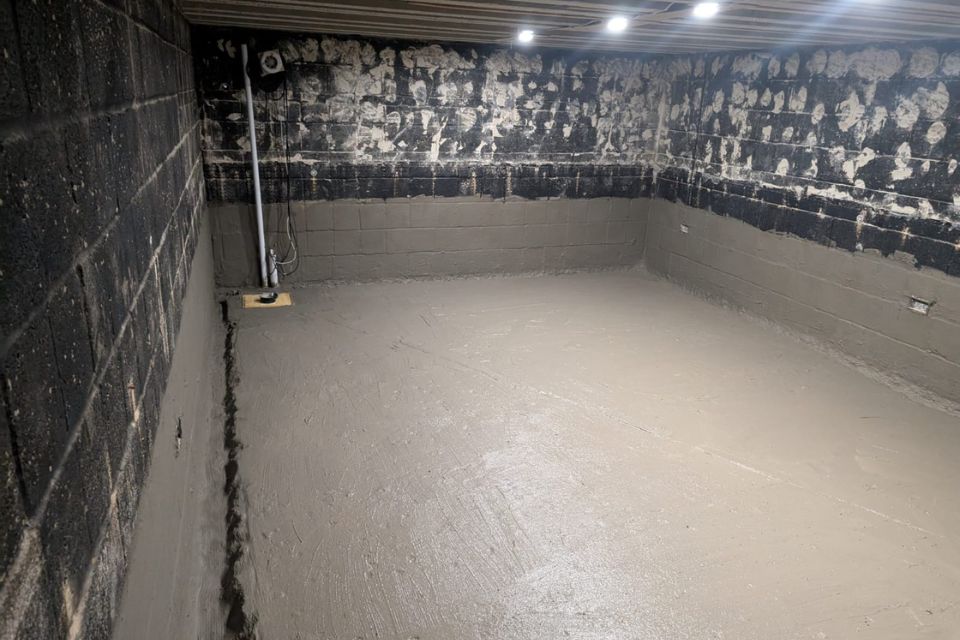
The basement conversion stripped back to the bare walls with Polysil floor sealant applied

Location: Wantage

Type of property: Detached 21st century family home with a part earth retaining basement, constructed of blockwork and reinforced concrete floor slab

Services used:

  • Free damp survey
  • Selective demolition and clearance of debris
  • Damp technician membrane installation
  • Carpentry
  • Plastering

Materials Used: 

  • Electronic Protimeter
  • Dust sheets
  • Delta MS500 wall membrane
  • Delta drainage channels
  • Delta V3 dual sump unit
  • High level alarm and control panel
  • Polysil TG500 floor sealant
  • Delta MS20 floor membrane
  • Moisture resistant chipboard flooring
  • Softwood treated battens and Delta fixing plugs
  • Plasterboard with set coat plaster

Problem:

19 years ago a damp proofing system was installed by another contractor as part of this basement conversion, using 20mm drainage floor membrane with screed over. The walls were fitted with an 8mm drainage membrane linked to the floor membrane. There was no evidence of a perimeter floor channel. There was, however, a small shallow sump hole formed on the floor slab, fitted with a single float activated pump, connected to a 2mm outlet.


The client advised our surveyor that the structural floor slab contains under-floor heating pipes connected to the steel reinforcement.


We found the walls to be finished with a combination of plasterboard on dot and dab adhesive, over the wall membrane.


In our expert opinion, the system was doomed to fail due to no correct drainage channels to the floor slab and the lack of an adequate sump chamber with no holding capacity, and inadequate pumping. The existing waterproofing does not comply with BS8102 (the British Standard for the Protection of Below Ground Structures Against Water Ingress) or BS8500 (the British standard for concrete structures).

Works completed: 

In view of our observations and findings we proposed to install a cavity drain membrane system compliant with BS8102 and BS 8500. This required the removal of all existing finishes to the walls and floor, back to the structural floor slab and block walls.


We also needed to cut into the floor slab to install the perimeter channel and the sump unit. This may have been problematic when considering the under-floor heating which may have required discussion with a heating contractor.


The proposed waterproofing complies with British standards provided that the system is fitted with a battery backup unit for use in power cuts.


A system of waterproofing was designed including:


  1. Lay dust sheets and protection to the areas of works and access routes.
  2. Remove existing staircase and set aside.
  3. Remove existing wall finishes and membrane.
  4. Remove existing floor screed and membrane.
  5. Cut and form 100mm wide by 50mm deep indent into the floor slab.
  6. Cut and form 800mmx800mmx800mm deep pit into the floor slab for sump unit.
  7. Where indicated in blue provide and install Delta MS500 membrane to the walls to full ceiling height.
  8. Where indicated in red provide and install Delta drainage channels into indent formed to the floor slab.
  9. Where indicated in red provide and install Delta V3 dual sump unit with high level alarm and control panel into pit formed within the floor slab.
  10. Apply Polysil TG500 sealer to the surface of the floor.
  11. Where indicated in blue provide and install Delta MS20 floor membrane and link to wall membrane.
  12. Provide and install moisture resistant chipboard flooring over the floor membrane.
  13. Provide and install softwood treated battens over the wall membrane secured to Delta fixing plugs.
  14. Provide and install plasterboard over the softwood battens.
  15. Provide and install battery backup system
  16. Finish plasterboard with set coat plaster.
  17. Reinstate staircase.
  18. Remove all debris and leave for clients finishes.

BEFORE

DURING

BEFORE

Property Conservation Services Treatments