
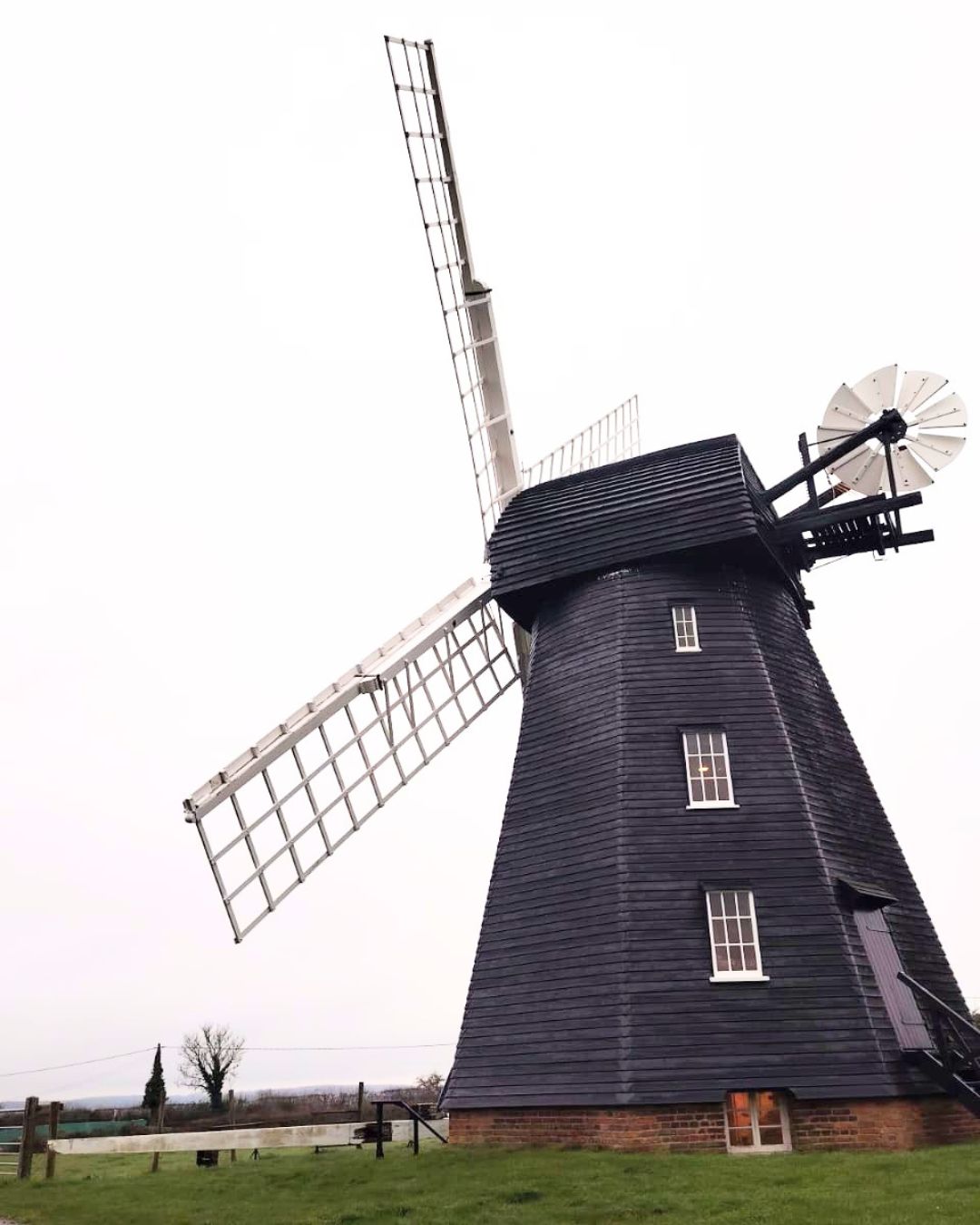
Location: Princes Risborough HP27
Type of property: Brick and timber framed windmill
Services used:
Materials Used:
Problem: Inspection of the windmill’s exposed and accessible surfaces of structural timbers unveiled evidence of active woodworm (Common Furniture Beetle) and Deathwatch Beetle (Xestobium rufovillosum) on several of the timbers throughout. Common Furniture Beetle (CFB) is a type of wood-boring insect which is often referred to generally as a ‘woodworm’. This type of wood-boring insect will infest sapwood of both hardwoods and softwoods, extending into the heartwood in some light-coloured hardwoods or damp conditions. The heartwood is the inner core of the tree while the sapwood is the softer outer wood. The adult beetle lays around 80 lemon-shaped white eggs in cracks, cornices, open joints and old flight holes in the timber and four to five weeks later the larvae hatch and tunnel into the wood. The tunnels are up to 2mm in diameter and are loosely packed with gritty, cream-coloured, bore dust which is often referred to as ‘frass’. The larvae will go through pupation and then emerge as an adult beetle from the timber through a round flight hole approximately 1.5 mm in diameter between late May and early August and this period is often referred to as the ’flight season’. In optimum conditions, the life cycle can be as short as one year, but it is normally longer, up to 4 years. Infestation damage is not normally structurally important, as it is often confined to the sapwood, except where a component is composed entirely of sapwood or where old types of natural or animal-based adhesives have been used as these are highly susceptible to attack. The Deathwatch Beetle (Xestobium rufovillosum) is another species of wood-boring beetle. It lives in pieces of wood and can sometimes be found in the wooden parts of old buildings. The adult beetle is brown and about 7 mm (0.3 in) long. Eggs are laid in dark crevices in old wood inside buildings, trees, and inside tunnels left behind by previous larvae. The larvae bore into the timber. Larvae feed for up to ten years before pupating and later emerging from the wood as adult beetles. Timber that has been damp and is affected by fungal decay is soft enough for the larvae to chew through. They use enzymes present in their gut to digest the cellulose and hemicellulose in the wood.
Works completed: First, we removed all friable loose timbers that were affected by any beetle infestation. On the first floor, we then applied a spray of insecticide product to all exposed timber surfaces throughout. On the second floor, however, we chose to apply a paste insecticide product to the middle two main oak support structural beams where evidence of Deathwatch Beetle was found. Timber treatments such as this are guaranteed for a period of ten years.
GALLERY