
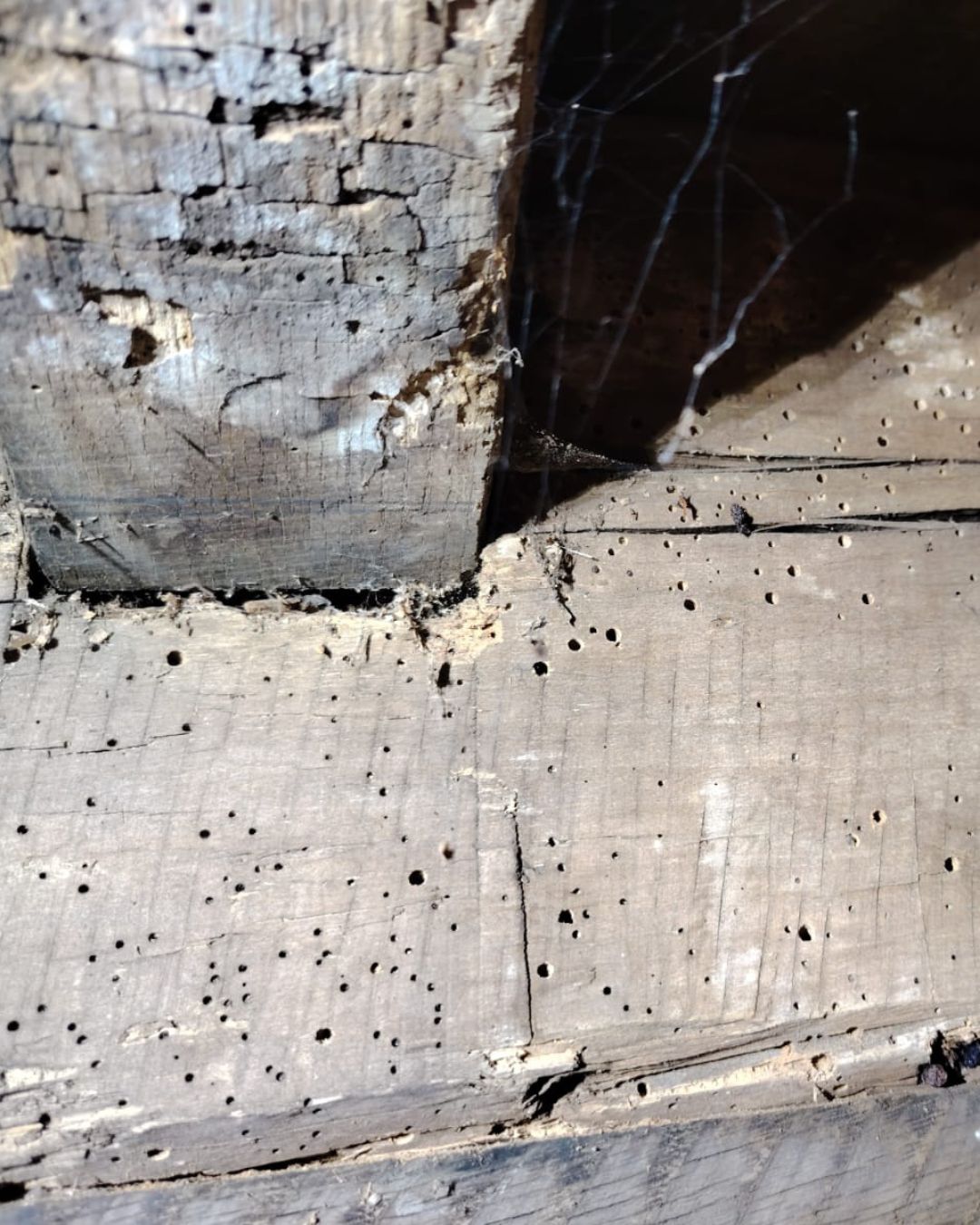
As the weather gets warmer, the signs of woodworm become more evident, but here’s what’s actually happening…
The ‘emergence season’ is when the wood-boring beetles, collectively known as woodworm, complete their transformations and exit the timber they’ve been calling home all winter.
When we refer to woodworm, we are referring to many species of wood-boring insects. The most common ones we see at Property Conservation Services are Common Furniture Beetle, Powderpost Beetle and Deathwatch Beetle.
Lifecycle of woodworm
The life cycle of woodworm is similar in all these species, but they do differ in which wood they prefer.
- The Egg: An adult beetle lays its eggs in the cracks, crevices, or old flight holes of seasoned timber
- The Larva: Once hatched, the larvae immediately burrow into the wood. This is the most destructive phase. They can spend anywhere from two to five years tunnelling through the timber, feeding on the cellulose
- The Pupa: When the larva is ready to mature, it moves toward the surface and creates a ‘pupal chamber’ where it transforms into an adult beetle
The Adult: Between April and September, the adult bites its way out, creating the iconic circular exit hole. They live only a few days or weeks, but just long enough to mate and start the cycle again.
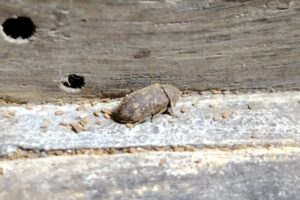
Common Furniture Beetle: Attacks both softwoods (like pine, cedar, and spruce) and hardwoods (like oak, ash, and elm). Preferring sapwood unless the heartwood (the dense centre) has been softened by rot. Timber in damp crawlspaces, lofts with poor ventilation, or floorboards near leaky pipes are prime targets.
Powderpost Beetle: Likes the sapwood of hardwoods (Oak/Ash/Walnut), looking for larger pores into which they ‘inject’ their larvae. Powderpost beetle is found in newer woods so look out for the common signs if you’ve just installed oak flooring or kitchen cabinets in case it wasn’t properly treated.
Deathwatch Beetle: Chooses old, damp or decaying hardwood. This life cycle can be incredibly long, sometimes up to 10 years if conditions are right. You might find Deathwatch Beetle in renovation projects and listed buildings.
Signs of woodworm to look out for
Because the damage happens internally, you have to be a bit of a detective. Keep an eye out for:
- Fresh Exit Holes: Small, round holes (1mm to 2mm) in timber. If the edges look new, the infestation is likely active
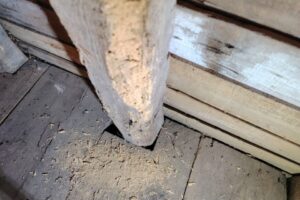
- Bore Dust (Frass): This looks like fine sawdust. It’s actually beetle excrement left behind as they emerge. Seeing fresh frass underneath holes is a major red flag
- Damaged Wood: Edges of floorboards or joists appearing crumbly or soft
- Tapping Sounds: Deathwatch Beetle are synonymous with a tapping sound, which is actually the male hitting his head against the wood to attract a mate
- Live Beetles: Seeing the actual beetles on walls or windowsills during the spring months.
What to do about timber infestation
Don’t panic! Woodworm does not spell the end of your timbers – it can be halted… Having said that, it should be address as soon as it is noticed as your structural timbers are being affected.
First, call the experts for a formal identification of the type of infestation. At PCS the cost of your woodworm and timber survey is removed from the final bill after treatment.
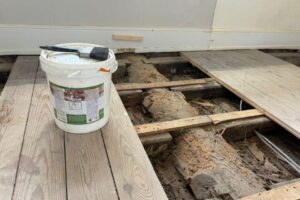
Timber treatment involves clearing the space around the infested timbers, and the application of professional insecticide. This is minimally intrusive and you can see real-life examples in our blog and on social media.
After treatment you need to address the route causes (identified in your surveyor’s report). This could include adjusting humidity and ventilation. Woodworm thrive in wood with a moisture content of around 12% and above, so using dehumidifiers and fixing any damp problems is essential.
NB: Timber treatments are guaranteed for 10 ten years and backed by our membership with The Property Care Association.
Have you spotted signs of woodworm?
Early detection and swift action are key to saving your timbers and reducing repair costs. If you’re not sure if you have a live or historical infestation, we’re the team to call for answers and quick treatment.
Protect your property’s heritage. Call Property Conservation Services on 01865 718383 or book your timber survey online to ensure your timber remains solid and secure.