
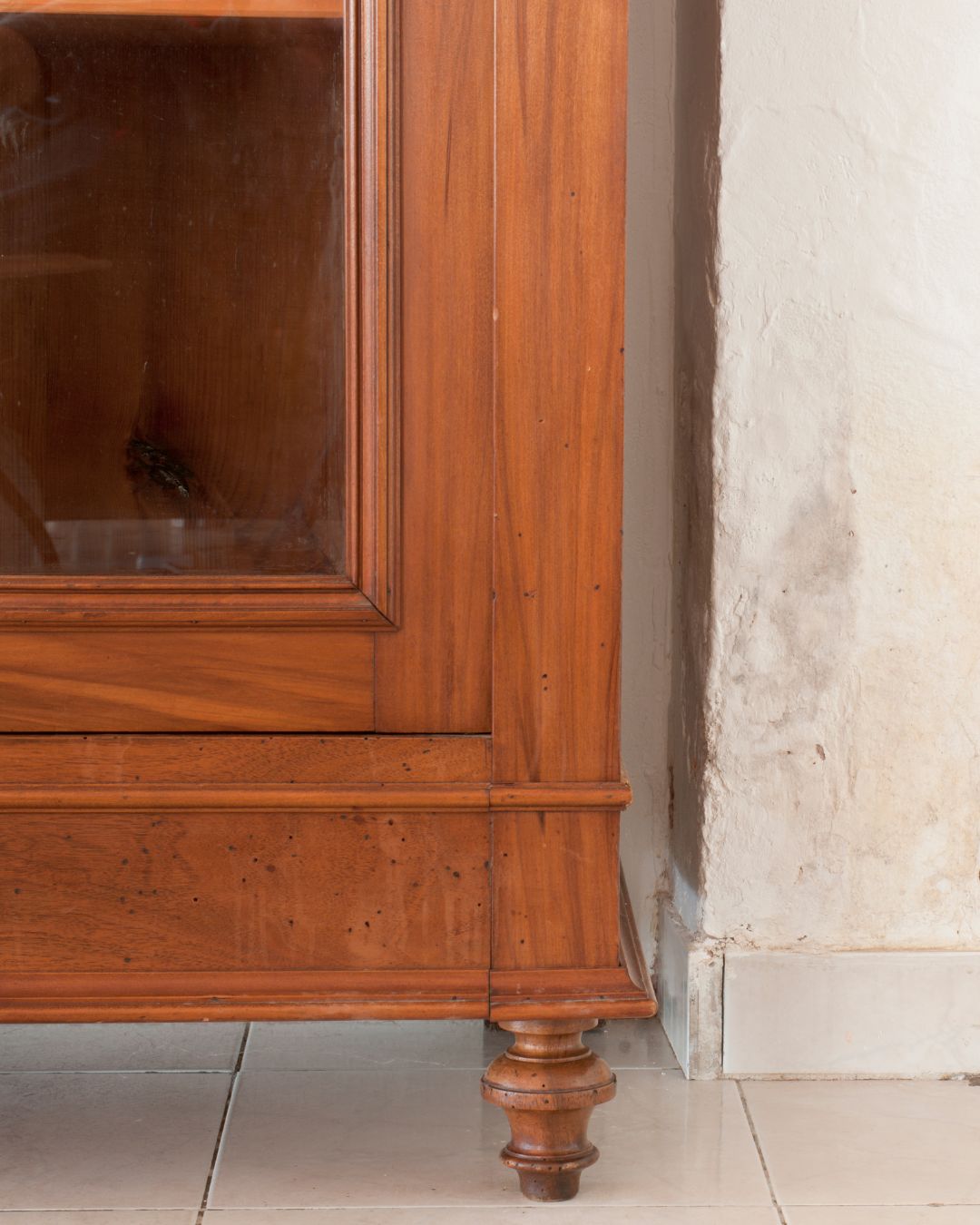
You may be shocked to hear that even modern furniture can bring woodworm into your home, so let’s find out how that happens…
Why modern furniture can bring woodworm into your house
Even new-build houses are at risk of a woodworm infestation. Primarily the risk comes from already infested wood such as second-hand or antique furniture, or from adult beetles flying into the house through open doors and windows during the warmer months.
As we know, these critters are attracted to damp wood, which is easier to chew and nutrient rich, creating the perfect environment to lay eggs and go through their growth cycle. High humidity in homes caused by things like poor ventilation, drying clothes indoors and modern building techniques that eliminate drafts can create a damp atmosphere, putting wood in the home at risk – even more modern furniture…
Veneered furniture
Many modern pieces are built with an attractive, solid wood front and uses less expensive plywood for the back here it won’t be seen. While this is cost effective, the more porous plywood can be a prime target for woodworm, especially if the furniture is tucked into a corner here ventilation is compromised.
Younger wood
Sapwood – the younger and softer outer layer of the tree, is occasionally used by modern furniture makers but can be an ideal place for woodworm to set up home, particularly Powderpost beetle.
Worn or damaged surfaces
Any wood becomes vulnerable if the protective outer surface is damaged in some way. Varnishes, paint and veneers offer no barrier against woodworm if there are gaps.
How best to prevent woodworm infestation
The best way to prevent woodworm is to eliminate their favourite things about wood!
- Keep your home dry and well-ventilated to reduce moisture.
- Varnish, paint or wax your wooden surfaces to create a physical barrier – on all surfaces.
- Thoroughly inspect any pre-loved items you consider buying.

Prevention is always better than cure, but if you do find evidence of woodworm in any of your timbers, the solution is non-invasive and simply executed.
You can read about the treatments in our previous blog, Protect Timber From Woodworm.
And if you have got woodworm, please call us for a professional survey and diagnosis. Once we identify the type of infestation we can move forward an effective treatment.