
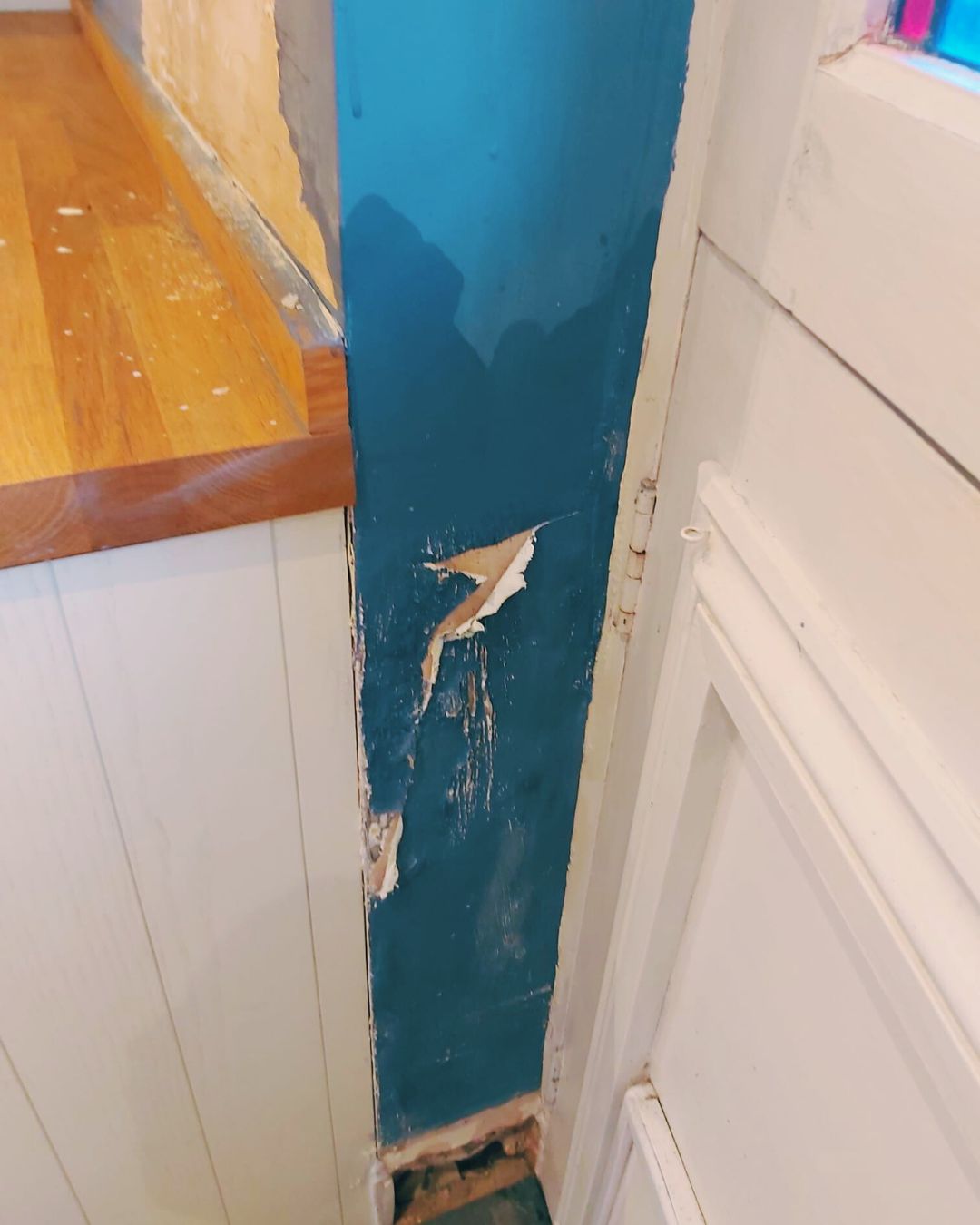
The quick answer to the question of what penetrating damp is, is quite simply water that enters the home unexpectedly, through from some kind of defect or damage. This is often through walls due to ineffective or missing dampproof courses and raised exterior ground, windows and doors through poor or damaged fittings, and roofs, thanks to missing tiles, blocked gutters and myriad other reasons.
Of course we wouldn’t be doing our due diligence if we didn’t expand somewhat on this explanation and show you some prime examples of penetrating damp that we’ve remedied.
Most common causes and signs of penetrating damp
Everyone has experienced water entering the home unexpectedly at some point – normally when a summer shower catches us by surprise, but when you’ve done your best to stop it and it still gets in, you may have one or more of these problems:
Windows and doors – failed seals, improperly fitted items and deteriorating wooden frames or pointing.
Exterior walls – Missing or cracked pointing, deteriorated or saturated brickwork, bridged or missing dampproof course and heavy burden of climbing plants such as ivy.
Chimneys and roofs – Missing, dislodged or broken tiles, missing or damaged flashing.
Water butts or tanks – Overflowing cisterns or water tanks creating puddles.
Rainwater goods or air bricks – Broken or blocked gutters or air bricks causes rainwater to pour or puddle onto the walls and saturate the brickwork.
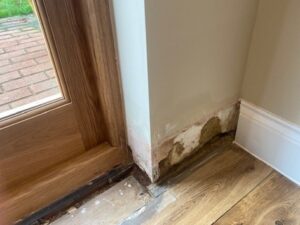
Penetrating damp through these causes shows up, unsurprisingly, as dark damp patches on your paintwork, lifting paint or wallpaper, dank and musty smells sometimes accompanied by mould, and moss or algae on the exterior surfaces or your building. You may also notice wet timber which could show up as swollen skirting boards or splitting window and door frames.
Treatment and prevention of penetrating damp
The first line of defence against penetrating damp is to correctly identify the root cause. Some cases may require more than common sense and the professionals will be needed to conduct a full exterior and interior damp survey.
Then, the damp and damaged parts of the building need to be removed and replaced. In the case of brickwork and mortar, a breathable, water repellent masonry cream can be applied. Inside, damp timber and plaster are stripped away and most commonly a waterproof membrane is installed.
Listed buildings require a ‘breathable’ approach and cannot be treated with membrane, so only traditional materials such as lime mortar and lime plaster are used.
The installation of additional ventilation is often considered at the same time as any remedial treatment is undertaken.
Suspect penetrating damp in your home?
Get the cause identified and book a damp survey with Property Conservation Services and the cost of the survey will be deducted from your final bill.
Damp proofing treatments by PCS are backed and guaranteed by The Property Care Association and waterproof membranes and plastering are guaranteed for ten years.
No risk, just a guaranteed fix.
Book your damp survey today and we’ll provide you with a full report and quotation without obligation.