
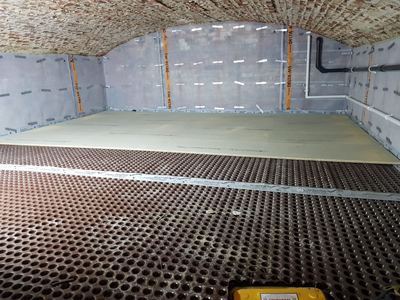
In this blog we’re looking at how the conversion of a damp basement can unlock extra living space without the need to extend into the garden or up into the loft. Let’s explore basement waterproofing…
No Extensions, No Moving Home
Lots of period homes in Oxfordshire have unheated, damp and unwelcoming cellars and basements that are currently being used to store items that would otherwise be in the loft or at the back of the garage.
But these rooms could easily be transformed from a dark and dank place to a warm and dry living space. That’s why homeowners are considering this as a serious option over extending into gardens, up into the roof, or even moving home.
The Damp Problem
The trouble is, basements can suffer damp problems…
Lateral damp penetration in a subterranean structure simply means that groundwater has seeped into the walls from the surrounding earth. In West Oxfordshire we also have high water tables which can compound the problem.
But damp through this kind of water ingress shouldn’t be the reason your basement is only used for storing damp-resistant stuff! That’s where professional waterproofing comes in.
Type A vs. Type C Waterproofing: Which Is Right for Your Home?
Type A (Barrier Protection / Tanking): This involves applying multi-coat renders or slurry coatings that seal the substrate. We recommend Type A Basement Waterproofing for basements with direct contact to the ground.
Type C (Basement Waterproofing): This is a broader approach that may include studded membrane linings on walls and floors, paired with perimeter drainage channels and a sump pump. This is often considered he ‘gold-standard’ of basement waterproofing as it manages water pressure rather than trying to fight it.
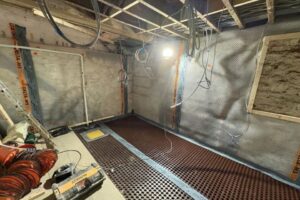 Type C Basement Waterproofing
When you get a damp survey on your basement, these methods should be explained to you, before the most effective method is recommended.
What You Should Know About Basement Waterproofing (Standards & Planning)
BS 8102:2022 forms the Code of Practice for protection of below-ground structures. Choosing a Certified Surveyor in Structural Waterproofing (CSSW) matters so you have peace of mind that your home is in the best hands. These professionals are trained to recognise and diagnose damp problems and design below-ground waterproofing systems that meet this Standard.
TIP: Look for the CSSW qualification before you book a survey.
It’s unlikely that you’ll need planning permission to turn your damp basement into a liveable space, but you will need building control approval. This ensures that certain safety aspects are catered for including:
- Damp Proofing.
- Structural Safety.
- Fire Escapes.
- Safe Ceiling Heights.
- Suitable Ventilation and Insulation.
 Fire escape installation
TIP: Be prepared to submit paperwork for inspection such as the Project Scope of Works, which will be provided by your contractor. The project site will also be inspected at some point.
Choosing Property Conservation Services as Your Basement Waterproofer
Looking for a no-obligation quote to see if your dream of a new office, bedroom or home gym is feasible? Then you’re in the right place!
Simply go to our Basement Conversions and Waterproofing page and click the ‘Book a Survey’ button. We look forward to hearing from you.
“Had a great visit from Ian [Girvan] at Property Conservation Services, on time, friendly, very helpful, efficient! From the first call, booking was easy, follow up emails and texts, to the onsite visit, this is great service and would absolutely recommend. I even learned a lot myself! Thanks Ian and thanks PCS.” Google Reviews