
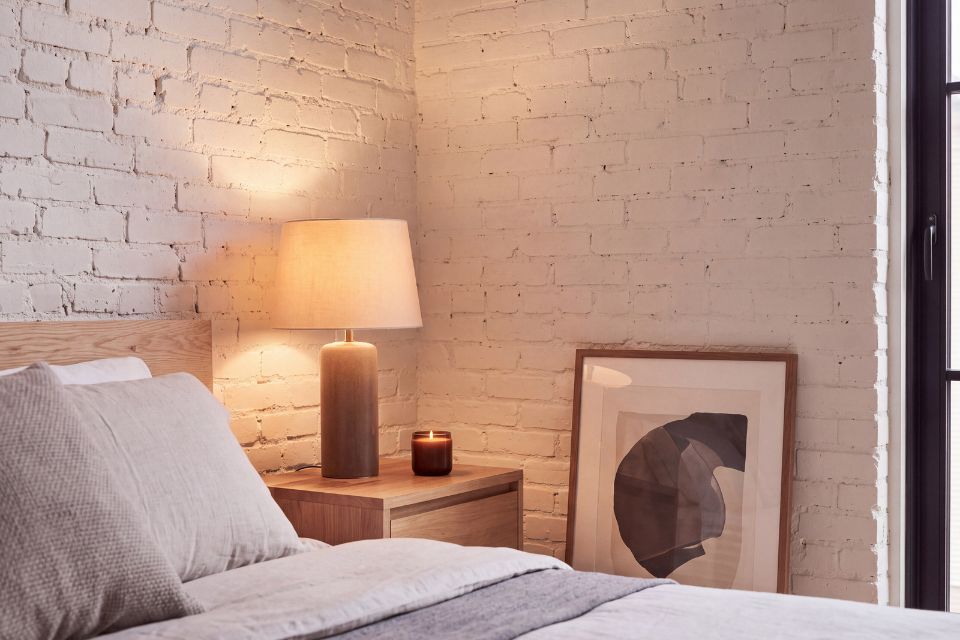
If you have ever rearranged your bedroom furniture only to find a musty patch of black mould behind a wardrobe or reached out to an external corner wall and noticed it feels bitterly cold and clammy to the touch, you‘re not alone.
It is one of the most common complaints homeowners raise during our damp surveys: Why does it always feel like there’s one cold corner that makes me feel like I’ve got a damp bedroom?
The instinct is often to look for a leaking roof, cracked brickwork, penetrating groundwater or even suspect damaged r missing cavity wall insulation. But, while external defects can never be ruled out, the culprit lurking behind that clammy corner is almost always internal – condensation thanks to cold spots and thermal bridging.
What’s Behind that Cold Corner?
Thermal Bridging
To understand why a bedroom corner suffers first, you have to look at how heat travels through the structure of a building.
In construction, a thermal bridge (or ‘cold bridge’) is an area of a building envelope that has significantly higher heat transfer than the surrounding materials. External corners are natural thermal bridges by geometry alone – they have two outside surfaces losing heat simultaneously to the elements, but only one internal corner receiving warmth from the room’s heating.
Thermal bridging also occurs where structural elements meet, such as:
- Concrete lintels above windows
- Steel beams tied into masonry
- Gaps in cavity insulation or areas of solid brickwork
Because heat escapes rapidly through these junctions, the surface temperature of the wall inside drops sharply.
When you sleep, you naturally produce moisture simply by breathing, averaging up to a litre of water vapour per person overnight. Warm air holds moisture well, but as soon as this humid air drifts toward that chilly, thermally bridged corner, it reaches its dew point. The vapour condenses out of the air onto the plaster surface as liquid droplets. Add in poor airflow behind a bed or wardrobe, and you have created the ideal breeding ground for damp and black mould.
How Property Conservation Services Can Help
Wiping the wall down with bleach or painting over the damp with anti-mould paint only treats the visual symptom. If the underlying surface remains cold, the condensation will return every autumn and winter.
At Property Conservation Services, our Property Care Association qualified specialists get to the root of thermal and moisture imbalances:
- Diagnostic Damp & Condensation Surveys: Using calibrated diagnostic equipment, thermal imaging, and moisture meters, we identify whether the dampness is pure surface condensation caused by a thermal bridge, rising damp, or salt-contaminated plaster.
- Thermal Upgrades: We can raise the temperature of the wall surface by using Iso-Therm, which is a flexible and super-thin internal wall insulation system.
- Ventilation & Humidity Control: Where stagnant air exacerbates cold spots, we design and install compliant mechanical ventilation systems, including energy-efficient Positive Input Ventilation (PIV) or continuous decentralised extract units to systematically remove excess humidity before it condenses.
- Structural & Masonry Repairs: If thermal bridging is compounded by missing DPCs or damp penetration through solid brick or stonework, our team provides full remedial solutions.
If you’ve had enough if that cold, damp bedroom corner, contact the team at Property Conservation Services today to book a professional survey and protect your home for the long term.